Crawl Space Encapsulation in Navy, VA
Your crawl space in Navy is cleaned, dried and sealed after water problems are corrected. Call 24/7 to arrange an assessment of damp insulation, torn liners or recurring moisture.
- Mold removed before sealing
- Moisture source checked first
- Vapor barrier and humidity plan
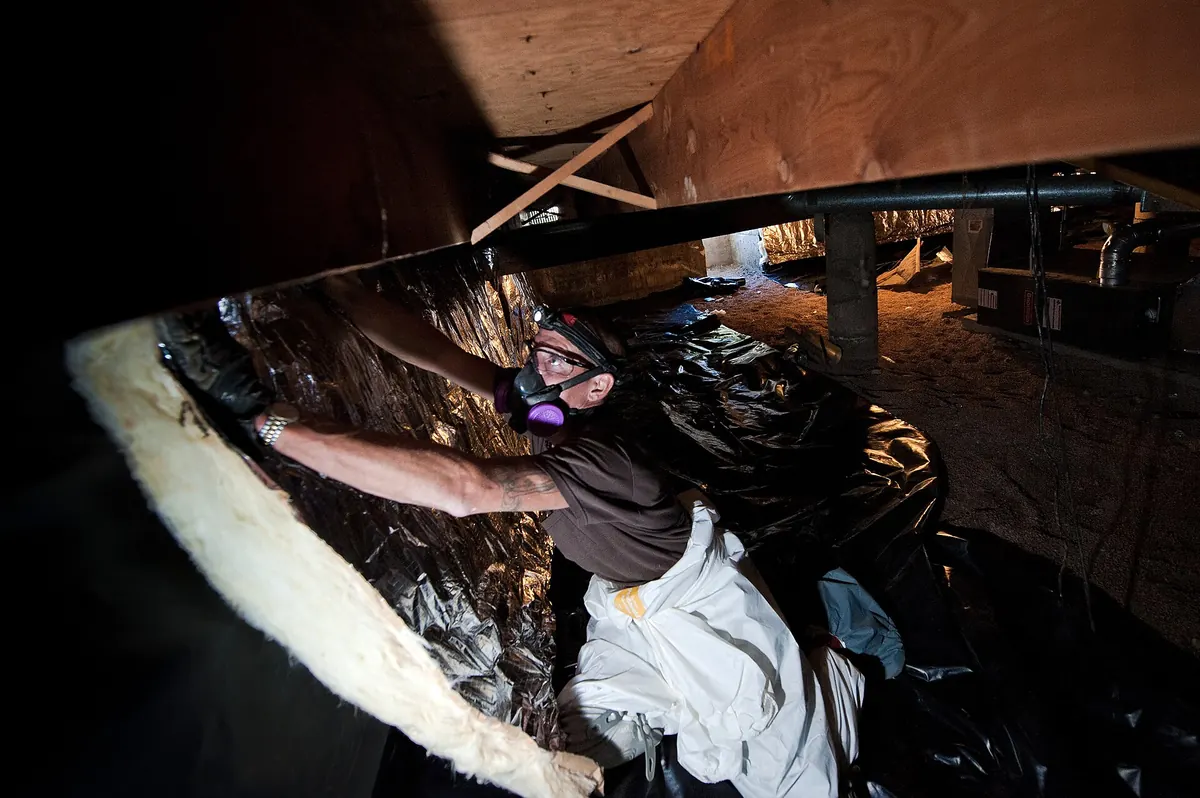
Crawl Space Encapsulation Services in Navy
Your closed crawl space uses humidity control and a sealed liner to restrict ground vapor and outside air. Mold removal and water correction precede that work.
Coverage extends to your crawl space door, foundation walls, soil and piers. Scope details establish what is covered, how vents are sealed, equipment access and insulation for foundation walls.
Your vapor barrier restricts ground vapor, while crawl space waterproofing addresses liquid water. Repairs and drainage are specified ahead of sealing.
- Installing a vapor barrier on walls and ground
- Sealing access openings and seams, plus vent sealing
- Mold removal before liner placement
- Drainage and humidity control assessment
- Sealed crawl space equipment checks

Recognizing the Need for Crawl Space Moisture Control in Navy
Moisture below your floors shows through damp conditions, torn liners or returning growth.
Your Crawl Space and Water Stains
After rainfall, puddles or staining indicate a water intrusion problem to correct.
Torn Crawl Space Liner
Gaps remain in a vapor barrier with unsealed seams or bare soil.
Wet or Sagging Insulation
You see visible mold, lingering dampness or sagging insulation.
Condensation Beneath Your Floors
You may notice pipe condensation or damp framing with elevated crawl space humidity.
Musty Smell That Returns
Odor returns after rain or persists above the access opening.
Your Crawl Space Encapsulation Process in Greater Washington
Work begins with assessing moisture, then cleaning and drying your space. Verification precedes sealing.
Crawl Space Assessment
Your ground, insulation and framing undergo inspection. A thermal imaging camera reveals temperature differences without identifying mold; hidden moisture checks use a moisture meter.
Moisture Source and Scope
Assessment covers drainage, condensation and leaks. Your written scope of work sets out sealing alongside leak repair and crawl space repair.
Contained Work Area
Around your affected area, the containment barrier consists of poly sheeting. Negative air pressure works alongside a HEPA air scrubber and protective equipment to curb dispersal of mold spores.
Damaged Material Removal
Porous materials beyond salvage and damaged insulation go into bags inside containment. Damaged framing undergoes the repairs specified, with unsuitable liner sections taken out.
Crawl Space Cleaning and Drying
Sound surfaces are cleaned with a HEPA vacuum and appropriate surface cleaning methods. Moisture readings monitor drying progress as air movers assist controlled drying after water sources are corrected.
Post-Remediation Check
Before containment removal or surface covering, finish cleaning and drying along with agreed post-remediation verification. When required by the scope, clearance testing uses an independent assessor.
Sealed Liner Installation
Specified walls, piers and ground receive the crawl space liner. Sealing covers vents and openings plus seams and attachments, preserving access for service.
Humidity Controls and Final Checks
Where included, checks cover drainage and controls alongside the crawl space dehumidifier. Final liner and crawl space door checks precede explanation of maintenance instructions.
Your Crawl Space Encapsulation Choice: Why Washington Mold Removal Services
Cleanup Through Sealing Checks
Damaged material is removed and retained surfaces are cleaned, dried and checked before the liner goes in.
Clear Scope Before Work
Your scope specifies liner installation and equipment alongside removal and water correction before work proceeds.
Crawl Space Moisture First
Your assessment traces water entry and humidity before sealing begins.
Calls Answered 24/7
Day or night, you can start a crawl space assessment throughout the metro with one number.
Before Crawl Space Work in Fairfax County
Start your assessment with a call, keeping the area untouched.
- Stay outside wet areas. Avoid standing water, and leave any wet electrical equipment untouched.
- Leave damaged material in place. Leave insulation in place and growth unbrushed until containment is ready.
- Keep access clear. Do not allow pets or children near the entrance to your crawl space.
- Avoid spreading particles. Do not aim fans at growth or run HVAC equipment suspected of contamination.
- Limit fresh water damage. Dry water-damaged items and areas within 24 to 48 hours to prevent mold growth, as EPA advises.
Crawl Space Encapsulation Cost in Navy
Size, equipment, damage and access affect your encapsulation cost. Published ranges are national figures for differing scopes and units. Do not automatically total job costs and equipment costs when they overlap.
Average total $5,500
$1,500 to $15,000 per jobSource: This Old House, Crawl Space Encapsulation Cost (checked 2026-10-23)A 1,000 square feet crawl space
$3,000 to $7,000 per jobSource: This Old House, Crawl Space Encapsulation Cost (checked 2026-10-23)Extensive moisture problems: up to $10 rather than the typical rate
$3 to $7 per square footSource: This Old House, Crawl Space Encapsulation Cost (checked 2026-10-23)What Changes Your Crawl Space Encapsulation Price
- Vapor barrier depth plus extent of wall coverage
- Insulation and material removal
- Dehumidifier and drainage needs
- Permits for planned work
- Mold or foundation repair
- Size and access
Understanding Your Crawl Space Sealing Price
These published national ranges are planning figures. Your on-site assessment defines the work and price before cleanup starts, including any separate source repairs or rebuilding.
Call (844) 352-3560 about costCrawl Space Encapsulation Service Area Across Greater Washington
Call (844) 352-3560 to arrange cleanup in Navy or nearby communities. One number covers the metro.
Crawl Space Encapsulation in Locations Near Navy
ZIP codes
What People Ask About Crawl Space Encapsulation in Navy
When can crawl space sealing be finished in Navy?
Your timing is set after assessment. Installation needs extra preliminary work for debris removal, wet insulation and low overhead clearance. Drying time is guided by moisture readings. Drainage and plumbing work, together with structural repairs, must advance as required before a new liner covers cleaned, dry surfaces.
Could your crawl space develop mold again after sealing?
Continuing water entry or high humidity can allow mold to reappear. Your space is sealed after cleanup and correction of moisture. The liner limits ground vapor, while humidity controls address damp air. Keeping seams intact and equipment maintained matters because fresh leaks may bring wet conditions back.
Should testing take place before or after crawl space cleaning?
Visible mold often makes air sampling unnecessary, according to guidance from EPA. Inspection identifies affected surfaces and the water problem together with checks for moisture. Complete the cleaning, drying and agreed verification ahead of liner placement. When clearance testing is specified, an independent assessor performs it. There is no federal limit for mold levels indoors.
What determines your crawl space encapsulation cost in Fairfax County?
Pricing for your property reflects access, liner design, current damage and square footage. Drainage work and humidity equipment can affect the scope, as can foundation wall insulation. The cards published above list national ranges, including sources and measurement units. Your property assessment defines the included work and separates additional repairs before the job begins.
Can you remain at home while work proceeds in the crawl space?
You might remain home when occupied rooms are kept apart from the work area. That arrangement can be affected by indoor access hatches, ventilation shared with living areas or utility disruptions. Your assessment identifies restrictions ahead of work, including any need for your household to leave temporarily.
What has to come out before the liner goes in?
Moldy insulation is taken out as needed, together with unusable liner sections and debris that cannot be salvaged. Sound framing can often be cleaned and dried; deteriorated wood needs a repair assessment. Your scope identifies removal before installation, so new ground or wall covering does not conceal unresolved damage.
Are leaks and drainage problems fixed too?
Water problems are identified before sealing, and corrections are defined in your scope. Inclusion requires listing the plumbing repairs, sump pump or drain system. Ground vapor control comes from a vapor barrier; correcting active water entry remains necessary.
Your Crawl Space Sealing and Insurance in Virginia
Coverage depends on the damage cause, your policy, exclusions and deductible. Water damage cleanup and preventive liner installation may receive different coverage decisions.
Working in a Crawl Space: Greater Washington Precautions
Your work area controls depend on contamination, access and the condition of the structure.
Contaminated Water
Arrange professional cleanup of contaminated water or sewage ahead of sealing.
Sensitive Occupants
For some people, mold may trigger symptoms of allergy and asthma, CDC says.
Damaged Framing
Decayed wood needs assessment for repair ahead of liner placement on surrounding surfaces.
Low Crawl Space Access
Limited headroom, along with ducts and pipes, shapes entry and debris removal routes.
Cleanup scope: EPA says areas under about 10 square feet can often be homeowner-cleaned. HVAC systems, larger areas and contaminated water need attention from a professional. Small patches alone cannot confirm entry is safe.
Crawl Space Materials Cleaned or Removed in Fairfax County
Before your liner goes in, sound materials receive cleaning and damaged ones are removed.
Wood framing and subfloor
- Wood in sound condition gets cleaned, then dried, while deteriorated wood is assessed for repairs.
Foundation surfaces
- Suitable cleaning methods address accessible masonry along with non-porous surfaces.
Insulation and old liner
- Replacement of materials follows checks of cleanup after removing moldy insulation and damaged materials.
Crawl Space Sealing Timing for Your Fairfax County Home
Access, correcting water problems, drying and installing the liner shape your schedule.
- Preparation: Debris and limited clearance influence equipment positioning and removal work.
- Drying: Material readings determine readiness for covering surfaces.
- Repairs and installation: Final sealing may need extra stages for plumbing, drainage or structural repairs.
Understanding Crawl Space Humidity and Odor in Navy
Installing a liner neither fixes an ongoing leak nor removes surface mold. A musty odor is examined as part of your assessment.
EPA recommends indoor relative humidity below 60 percent, ideally 30 to 50 percent. Humidity controls support moisture management after cleanup and sealing.
Requirements for Your Virginia Crawl Space Sealing Project
Crawl Space Work Requirements
Virginia does not currently license mold inspectors or remediators. A state license program ran briefly and was deregulated in 2012, and the Department of Professional and Occupational Regulation (DPOR) reported in 2026 that licensing is not in place.
Repair Permits
The structural work, plus included plumbing and electrical tasks, determines permit needs.
Equipment and Ventilation
Designing the seal includes planning for service access, drainage and ventilation of equipment.
State Mold Information
The Virginia Department of Health has a mold page covering moisture control, health effects and cleanup basics. It says the department does not do mold testing or remediation and does not recommend specific mold contractors.
State guidance: Virginia DPOR, Mold Inspection and Remediation Workforce Study page; DPOR Mold Inspection and Remediation Workforce Study report (Jan 2026, RD247); Virginia Code 55.1-1215, move-in inspection report and mold; Virginia Department of Health, Mold; Virginia Department of Housing and Community Development
Related Services and Next Steps
Start Your Crawl Space Encapsulation in Navy
Call 24/7 to arrange your assessment. Your cleanup starts with the affected surfaces, moisture source and access to your home.